According to the International Council of Homeopathy (ICH) and the European Central Council of Homeopathy (ECCH), homeopathy is defined as follows:
-
Homeopathy is a medical system based on the natural “law of similarity”, meaning “like cures like”. When a medicine is used in large doses, it can create artificial symptoms in a healthy body. According to the homeopathic “law of similarity”, when a series of unique symptoms representing a patient's condition are similar to the artificial symptoms created by a certain medicine, that medicine can be prescribed in small doses.
-
The symptom manifestations of each remedy are primarily discovered through a standard procedure—Proving. Proving is a procedure in which a group of healthy volunteers tests the efficacy of a substance. Symptoms are recorded and compared to establish the data for that remedy, which is the definition of that remedy in homeopathy.
-
Each homeopathic remedy has its unique symptom manifestations, recorded in the Homeopathic "Materia Medica".
-
Homeopathy must be performed by a homeopath through careful diagnosis. Patients should express as much detail as possible about their symptoms, thoughts, feelings, and any medical history related to their current complaint. The homeopath will listen patiently and discuss these details. After recording the case information, the homeopath will analyze the entire case and compare it with known homeopathic remedies in the materia medica to find the remedy that best matches the patient's mental, emotional, and physical symptoms.
Harvard University: Personalized treatment by a professional homeopath is superior to over-the-counter homeopathic medications.

A 2016 study by Harvard University scholars, published in the American Journal of Public Health, indicated that the number of people using homeopathy in the United States increased by 15% over five years. Homeopathy prescribed by a professional homeopath was significantly more effective than self-prescriptions or over-the-counter homeopathic medications.
Reference: Dossett, Michelle L., et al. "Homeopathy use by US adults: results of a national survey." American journal of public health 106.4 (2016): 743-745.
https://www.doi.org/10.2105/AJPH.2015.303025
What scientific evidence is there that homeopathy works?
Those new to (or unfamiliar with) homeopathy may assume there is no scientific evidence to prove its effectiveness, but this statement is inaccurate! Homeopathy research is a relatively new field, so while it's true that there isn't a "large amount" of research, there is increasingly more evidence, which is very different from having no evidence at all.
By the end of 2025, 308 randomised controlled trials of homeopathic treatment for 161 medical conditions have been published in peer-reviewed journals with sufficient information provided to analyse the results.
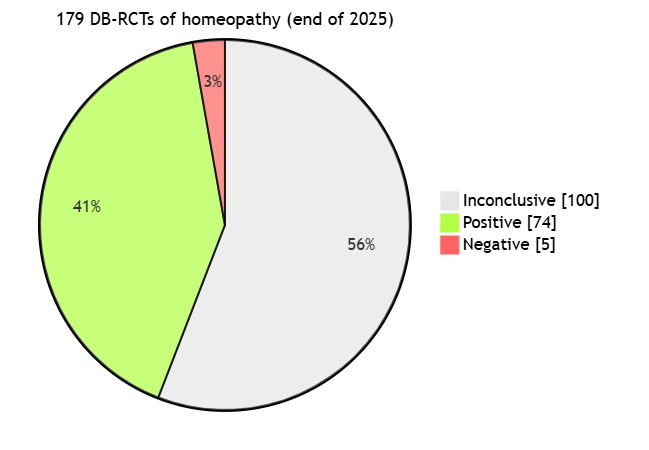
Of these, 179 were double-blind, randomised, placebo-controlled trials, covering 105 different medical conditions:
-
41% were positive (74 trials) – finding that homeopathy was effective
-
3% were negative (5 trials) – finding that homeopathy was ineffective
-
56% were inconclusive (100 trials)
How does this compare with evidence for conventional medicine?
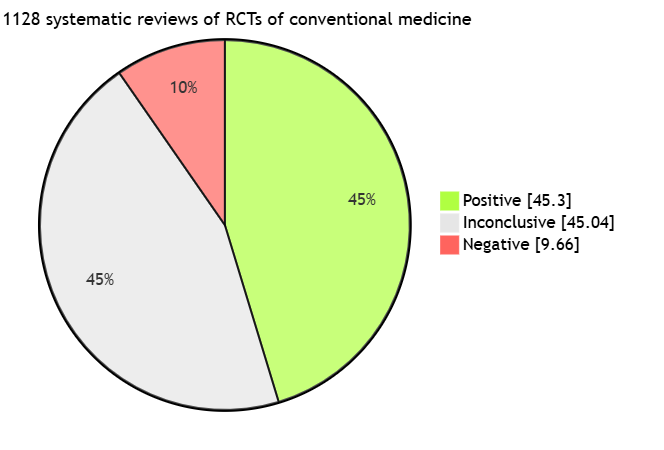
An analysis of 1128 systematic reviews of RCTs of conventional medicine had strikingly similar findings in terms of the proportion of positive clinical trials:
-
45% were positive – the treatments were likely to be beneficial
-
10% were negative – the treatments were likely to be harmful
-
45% were inconclusive – the evidence did not support either benefit or harm.
Reference: https://www.hri-research.org/resources/homeopathy-faqs/scientific-evidence-for-homeopathy/
How do we know homeopathic medicines are not “just sugar pills”?
Laboratory experiments have demonstrated that homeopathic medicines are not just sugar pills.
Critics of homeopathy point to the fact that homeopathic medicines are so highly diluted that there is ‘nothing in them’.
This comes from the fact that the liquids used to make some homeopathic medicines are diluted beyond the threshold known as Avogadros number (dilution 10-23). This means that the liquid is so highly diluted that you would not expect any molecules of the original substance to remain.
It is these ‘ultra-high dilutions’ (homeopathic medicines above 12c or 24x potency) which attract controversy, because they clearly cannot work in the same way as conventional medical drugs i.e. through molecules interacting directly with the body’s biochemistry.
Researchers around the world are investigating the mechanism of action of these medicines, which is likely to be based in physics rather than chemistry. Although there are various theories being explored, as yet, we do not understand how homeopathic medicines work.
What we do know is that many laboratory studies have shown ultra-high dilution homeopathic medicines having biological effects you would not see if they were ‘just water’ or ‘just sugar pills’, for example:
Adding homeopathic histamine to basophils (white blood cells) can trigger them to release histamine
28 scientific papers have been published on this topic, 23 of which reported positive results. 11 publications were judged to be of high quality, of which 8 reported positive results.
The earliest study reported inhibition of degranulation with ultra-molecular dilutions of anti-IgE,2 but these initial experiments proved to be unreproducible.
However, subsequent studies using a modified method and using ultra-molecular dilutions of histamine, have shown positive results. These findings have been reproduced in several independent laboratories, as well as in a multi-centre series of experiments.
Homeopathic thyroxine, at the ultra-high dilution of 30x, slows down the rate at which tadpoles turn into frogs
In amphibians, the hormone thyroxine stimulates metamorphosis. Over almost 20 years, various teams have tested homeopathic dilutions of thyroxine on frogs by adding it to the bathing water tadpoles are kept in. An independent meta-analysis of these trials identified 22 experiments – 15 carried out by the original team in Austria and 5 by independent researchers. All 22 experiments found the same trend – that thyroxine 30x (diluted beyond Avogadro’s limit using the homeopathic manufacturing process) inhibits metamorphosis, though the exact results varied. This effect has now been observed by 7 researchers from Austria, Germany, Switzerland + the Netherlands.
Reference: https://www.hri-research.org/resources/homeopathy-faqs/not-just-sugar-pills/
Is Homeopathy Pseudoscience?
There are critics who claim that homeopathy is ‘pseudoscience’ and only non-scientists are interested in the subject.
In fact, scientists in highly respected universities, research institutions and hospitals around the world are carrying out research into homeopathy using the same research techniques as those used to investigate conventional medical treatments.
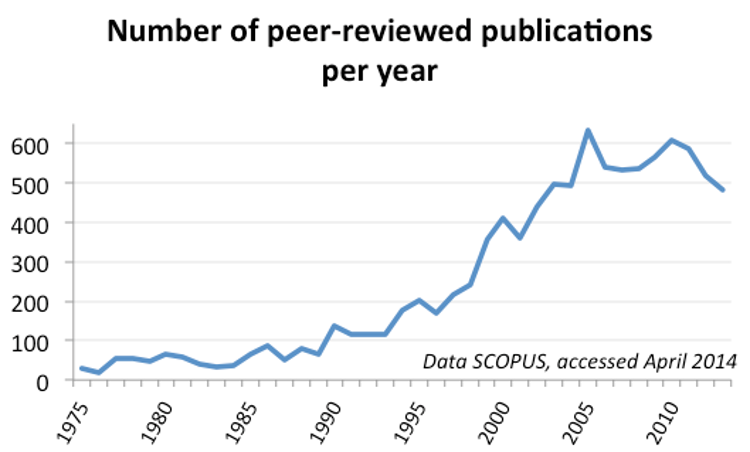
Homeopathy research is a relatively new field, but the number of articles published in peer reviewed journals has risen significantly over the past 40 years.
This lag behind conventional medicine is hardly surprising when one considers the lack of funding available e.g. in the UK less than 0.0085% of the medical research budget is spent on research into complementary and alternative medicines.
International Research Conference
HRI Barcelona 2013 – Cutting Edge Research in Homeopathy
The inaugural HRI International Homeopathy Research Conference was held in Barcelona in June 2013. The programme included presentations by 5 Professors and 40 doctors (PhDs or medics) from over 20 countries, covering clinical, experimental and veterinary research.
HRI Rome 2015 – Cutting Edge Research in Homeopathy
The 2nd HRI International Research Conference, held in Rome on 5-7 June 2015, continued the ongoing theme of Cutting Edge Research. The programme included presentations on clinical, fundamental and basic research, by 6 Professors and 28 doctors (PhDs or medics) from 17 countries.
HRI Malta 2017 – Cutting Edge Research in Homeopathy
The 3rd HRI International Research Conference was held in Malta from 9-11 June 2017, continuing the established theme of Cutting Edge Research. The programme included presentations on clinical, fundamental and basic research, by 4 Professors and 28 doctors (PhDs or medics) from 18 countries.
HRI London 2019 – Cutting Edge Research in Homeopathy
The 4th HRI International Research Conference was held in London from 14-16 June 2019. HRI London 2019 was a truly international event, as demonstrated by our 352 delegates from 38 countries, and 75 researchers and medics presenting the very latest research in the field of homeopathy from 27 countries.
HRI London 2023 – Cutting Edge Research in Homeopathy

With 230 attendees from 27 countries, HRI’s conferences remain truly international. HRI London 2023 will be remembered for its inspiring blend of ‘old and new’, with a programme notable for the maturity of the evidence presented by experienced names drawing on decades of work, as well as the enthusiasm and skill of up-and-coming researchers who took the floor to present their new findings. To create the scientific programme, 140 abstracts were peer reviewed to select 35 for oral presentation and 33 posters, enabling 61 researchers from 15 countries to present their work.
So in what way is homeopathy ‘unscientific’?
Well-qualified scientists in respected institutions are continuing to carry out high quality basic research, clinical research and veterinary research in homeopathy, and are reporting their results in peer-reviewed scientific literature. Therefore, the only basis for the argument that it is ‘pseudoscience’ is that we do not know how homeopathy works.
Usually, when a phenomenon is observed which cannot be explained by what ‘science’ already knows, this triggers fresh scientific enquiry – it is not dismissed as ‘unscientific’ purely because it has yet to be understood.
Reference: https://www.hri-research.org/resources/homeopathy-faqs/homeopathy-is-real-science/
“Can homeopathic medicines be used without knowing how they work?”
Knowing how a medicine works has never been a prerequisite for its use. Aspirin (acetylsalicylic acid) is one of the most widely used drugs in the world, yet it was used for over 70 years before its mechanism of action was discovered in 1971. The drug is still actively researched today, as it has numerous biological effects which are still not fully understood.
Variations of acetylsalicylic acid have been used to treat pain and fevers since ancient times, beginning with preparations made from its natural forms – the leaves and bark of willow or poplar trees.
In 1899 an artificially synthesised form of the active ingredient passed clinical trials and the drug ‘aspirin’ as we know it today was launched.
Similarly, homeopathy has a long history of traditional use. This has led to our clinical understanding of what homeopathic medicines can do, being ahead of our theoretical understanding of how these medicines have a biological effect.
Finding the mechanism of action of homeopathic medicines will be fascinating and many teams around the world are carrying out fundamental and basic research to investigate this important question.
Reference: https://www.hri-research.org/resources/homeopathy-faqs/understanding-how-it-works/